Introduction
Most websites approach SEO like throwing spaghetti at the wall—random blog posts here, some meta tag updates there, maybe a link building attempt if someone remembers. No strategy. No prioritization. No clear path from current state to desired outcomes.
The result? Scattered efforts that deliver scattered results. Teams work hard without knowing what matters most. Leadership questions ROI. SEO initiatives stall because nobody knows what comes next.
An SEO roadmap solves this chaos. It's your strategic plan mapping the journey from where you are today to top rankings and qualified traffic. Clear phases, prioritized actions, realistic timelines, and measurable milestones that actually connect effort to business impact.
This guide walks you through building a complete SEO roadmap from foundation audits to ongoing optimization. You'll learn how to assess current state, prioritize improvements, plan strategic initiatives, and structure everything into a document stakeholders understand and teams can execute.
Whether you're launching SEO from scratch or reorganizing existing efforts, a well-structured roadmap transforms reactive tactics into strategic growth that compounds over time.
What an SEO Roadmap Actually Is
An SEO roadmap is a strategic document outlining how you'll improve search visibility over a specific timeframe—typically 6-12 months—with clear phases, priorities, and success metrics.
Roadmap vs. Random Task List
Task list thinking: "Let's optimize meta descriptions, write 10 blog posts, and get some backlinks"
Roadmap thinking: "Phase 1: Fix technical issues blocking crawling (Month 1). Phase 2: Target bottom-funnel keywords driving revenue (Months 2-3). Phase 3: Build topical authority in core categories (Months 4-6)."
The difference: Roadmaps connect actions to strategy, sequence work logically, and align team efforts toward specific outcomes.
Key Components of an SEO Roadmap
Current state assessment: Where you are today (traffic, rankings, technical health)
Goals and targets: Where you're going (traffic growth, ranking positions, conversions)
Strategic initiatives: Major projects required (technical fixes, content programs, link building)
Phased timeline: When work happens in logical sequence
Resource requirements: Who does what, tools needed, budget allocation
Success metrics: How you'll measure progress and ROI
Risk mitigation: Dependencies, constraints, potential blockers
Timeline Framework
Typical roadmap horizon: 6-12 months with quarterly reviews
Phase structure:
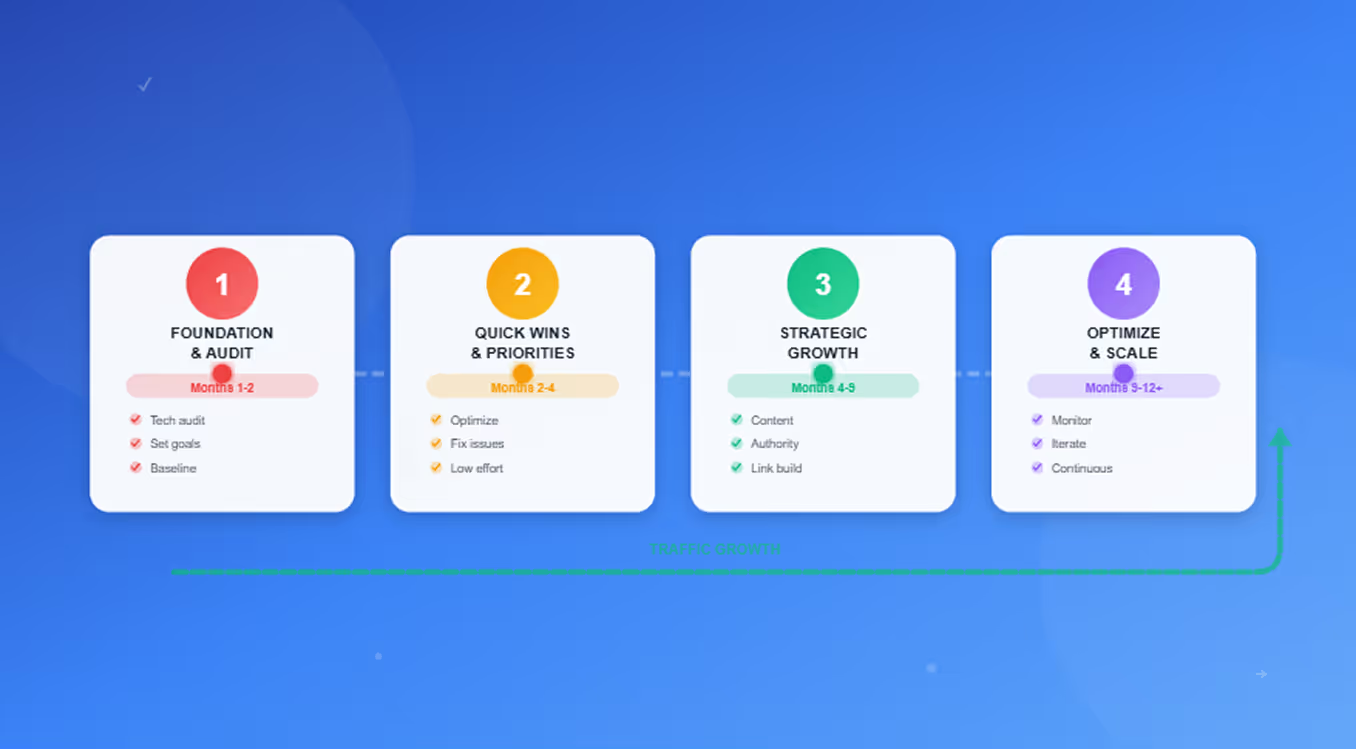
- Phase 1 (Months 1-2): Foundation and quick wins
- Phase 2 (Months 2-4): Strategic priorities
- Phase 3 (Months 4-9): Growth and scaling
- Phase 4 (Ongoing): Optimization and iteration
"An SEO roadmap isn't a rigid plan—it's a strategic framework that adapts as you learn what works while maintaining focus on key objectives." — SEO Strategy Expert
Phase 1: Foundation & Audit (Months 1-2)
Before strategizing growth, understand your current reality. Phase 1 establishes baseline and identifies critical issues blocking progress.
Current State Assessment
Gather essential data:
Traffic baseline:
- Current organic traffic (Google Analytics last 3-6 months)
- Top landing pages by traffic
- Traffic trends (growing, stable, declining)
- Conversion rates from organic traffic
Ranking snapshot:
- Current positions for target keywords (Ahrefs, SEMrush)
- Ranking distribution (how many keywords in top 3, top 10, top 50)
- Competitor comparison (who ranks for your target keywords)
Technical health check:
- Crawl errors (Google Search Console)
- Indexation status (pages indexed vs. pages on site)
- Site speed and Core Web Vitals assessment
- Mobile usability issues
Technical SEO Audit
Critical technical issues to identify:
Crawling and indexing:
- Robots.txt blocking important content
- XML sitemap errors or missing
- Duplicate content issues
- Canonicalization problems
- 404 errors and broken links
Site architecture:
- Poor URL structure
- Orphaned pages (no internal links)
- Deep page depth (too many clicks from homepage)
- Missing breadcrumb navigation
Performance:
- Slow page load times
- Large image files
- Render-blocking JavaScript
- Poor mobile experience
Use tools: Screaming Frog, Google Search Console, PageSpeed Insights—and our guide to the best site audit tools for Webflow covers everything you need for a thorough technical crawl.
Content Inventory
Assess existing content:
- Total pages on site
- Content by type (blog posts, product pages, landing pages)
- Content gaps for target keywords
- Thin or low-quality content requiring improvement
- High-performing content to replicate
Competitive Analysis
Understand the competitive landscape:
- Top 5 competitors ranking for your target keywords
- Their content strategies (topics, depth, formats)
- Backlink profiles (domain authority, linking domains)
- Technical advantages they have
- Content gaps they've missed
Goal Setting
Define specific, measurable SEO goals:
Traffic goals: Increase organic traffic from X to Y by [date]
Ranking goals: Achieve top 3 positions for [number] priority keywords
Conversion goals: Improve organic conversion rate from X% to Y%
Business goals: Generate $X revenue from organic traffic
Make goals SMART: Specific, Measurable, Achievable, Relevant, Time-bound
Phase 2: Quick Wins & Priorities (Months 2-4)
With baseline established, tackle immediate opportunities for fast results while planning long-term strategy.
Low-Hanging Fruit Identification
Quick wins that deliver results in 30-60 days:
Title tag and meta description optimization:
- Pages ranking positions 4-10 (close to top 3)
- Improve CTR with compelling titles
- 2-4 hour effort per batch of 20 pages
Content refreshing:
- Update outdated statistics and information
- Add recent examples and case studies
- Improve content depth on high-traffic pages—our guide on how to develop an SEO content strategy in Webflow shows exactly how to prioritize which pages to refresh first
- 1-2 hours per page
Internal linking improvements:
- Link from high-authority pages to target pages
- Improve anchor text relevance
- Fix orphaned pages
- 4-6 hours for site-wide audit and fixes
Image optimization:
- Compress large images
- Add descriptive alt text
- Implement lazy loading
- 2-3 hours for priority pages
Fixing critical technical issues:
- Resolve crawl errors
- Implement missing schema markup
- Fix broken internal links
- 4-8 hours depending on severity
Impact vs. Effort Matrix
Prioritize work by plotting on 2×2 matrix:
High Impact, Low Effort (DO FIRST):
- Optimize pages ranking 4-10
- Add missing alt text to images
- Fix critical technical errors
High Impact, High Effort (STRATEGIC PRIORITIES):
- Create comprehensive content for high-value keywords
- Launch major content initiative
- Migrate to better technical platform
Low Impact, Low Effort (FILL-IN WORK):
- Update author bios
- Improve footer links
- Minor content tweaks
Low Impact, High Effort (SKIP/DEFER):
- Vanity projects
- Low-value keywords
- Over-optimization of minor elements
First 30-60 Day Actions
Month 1:
- Complete technical audit and fix critical issues
- Optimize top 20 pages (titles, meta descriptions, content updates)
- Implement schema markup on key page types
- Set up tracking and reporting dashboards
Month 2:
- Optimize next 50 pages with low-hanging fruit improvements
- Launch first content initiative (5-10 strategic articles)
- Begin outreach for initial backlinks
- Review performance data and adjust priorities
Resource Allocation
Typical Phase 2 resource needs:
- Technical specialist: 20-30 hours for audits and fixes
- Content creator: 40-60 hours for optimization and new content
- SEO strategist: 20-30 hours for planning and coordination
- Designer: 10-20 hours for image optimization and creation
Phase 3: Strategic Content & Growth (Months 4-9)
With foundation solid and quick wins captured, focus on strategic initiatives that build long-term authority and traffic.
Content Strategy Development
Build content that drives rankings and business value:
Topic cluster approach:
- Pillar content: Comprehensive guides on core topics (3,000-5,000 words)
- Supporting content: Specific subtopics linking to pillar (1,500-2,500 words)
- Internal linking connecting all related content
Example:
- Pillar: "Complete Guide to Project Management" (5,000 words)
- Clusters: "Project Management for Remote Teams" (2,000 words), "Agile vs Waterfall Project Management" (1,800 words), "Best Project Management Tools" (2,500 words)
Content types that drive SEO—for a deeper look at how to structure these for maximum impact, see our guide to content marketing strategies that work for Webflow sites:
- How-to guides: Step-by-step instructions for user problems
- Comparison articles: "[Product A] vs [Product B]" (high commercial intent)
- Ultimate guides: Comprehensive resources on topics
- Case studies: Real results building trust and expertise
- FAQ content: Targeting question-based queries
Keyword Targeting Plan
Strategic keyword selection:
Bottom-funnel keywords (prioritize first):
- High commercial intent
- Lower competition
- Closer to conversion
- Example: "project management software for startups under $50/month"
Mid-funnel keywords (second priority):
- Consideration stage
- Comparison and evaluation queries
- Example: "best project management software for teams"
Top-funnel keywords (long-term investment):
- Informational intent
- Higher search volume
- Authority building
- Example: "what is project management"
Target 50-100 keywords across funnel stages with clear prioritization. Use the best Webflow SEO tools for keyword research to validate search volume and competition before committing to a target.
Content Calendar Creation
Plan content production systematically:
Quarterly content goals:
- Q2: 15 articles (5 bottom-funnel, 7 mid-funnel, 3 top-funnel)
- Q3: 20 articles (scaling production)
- Q4: 25 articles (full velocity)
Content calendar elements:
- Target keyword and search intent
- Content type and word count
- Author assignment
- Due date and publish date
- Content brief completed
- Status tracking (ideation, writing, editing, published)
Production workflow:
- Keyword research and content brief (Week 1)
- First draft writing (Week 2)
- Editing and optimization (Week 3)
- Publishing and promotion (Week 4)
Link Building Approach
Acquire high-quality backlinks strategically:
Link building tactics (by priority):
1. Digital PR and original research:
- Conduct industry surveys or studies
- Publish unique data
- Pitch to journalists and industry publications
2. Resource link building:
- Create valuable resources (tools, calculators, templates)
- Reach out to sites linking to similar resources
- Offer your superior resource as replacement
3. Guest posting:
- Target authoritative sites in your industry
- Provide genuine value with expertise
- Include natural, relevant links back to your site
4. Broken link building:
- Find broken links on relevant websites
- Reach out with your content as replacement
- Provide value to webmaster and their audience
Monthly targets: 5-10 high-quality backlinks from relevant domains
Phase 4: Optimization & Scaling (Months 9-12+)
SEO isn't set-and-forget. Phase 4 focuses on continuous improvement and scaling successful initiatives.
Ongoing Optimization
Monthly optimization activities:
Content performance review:
- Identify underperforming content (low traffic, high bounce rate)
- Update and improve based on performance data
- Double down on top-performing topics with additional content
Technical health monitoring:
- Monthly crawl for new errors
- Monitor Webflow performance optimization metrics including site speed and Core Web Vitals
- Check indexation status
- Fix issues proactively
Conversion rate optimization:
- Webflow A/B testing tools and methods let you test CTAs and page layouts to lift conversion without increasing traffic
- Improve user experience based on behavior data
- Optimize for featured snippets
Performance Monitoring
Track key metrics monthly:
- Organic traffic growth
- Keyword ranking improvements
- Conversion rates from organic traffic
- Backlink acquisition rate
- ROI and revenue attribution
Tools: Google Analytics, Google Search Console, Ahrefs/SEMrush, custom dashboards
Testing and Iteration
Data-driven improvement:
- Test different content formats (guides vs. listicles)
- Experiment with title tag formulas
- Try different internal linking strategies
- Measure impact and scale what works
Team Coordination
Align ongoing efforts:
- Weekly content team sync
- Monthly SEO performance review with leadership
- Quarterly strategy refresh based on learnings
- Document processes for consistency
Creating Your Roadmap Document
Structure your roadmap for clarity and stakeholder buy-in.
Format and Structure
Recommended roadmap sections:
1. Executive Summary:
- Current state overview
- Strategic objectives
- Expected outcomes
- Resource requirements
2. Phased Timeline:
- Visual Gantt chart or timeline
- Major milestones per phase
- Dependencies noted
3. Detailed Initiatives:
- Each major project broken down
- Objectives, deliverables, timeline
- Resources needed
- Success metrics
4. Metrics and Reporting:
- KPIs being tracked
- Reporting cadence
- Dashboards and tools
5. Risks and Constraints:
- Potential blockers
- Resource limitations
- Competitive factors
Stakeholder Communication
Tailor roadmap presentation:
For executives: Focus on business impact, ROI, competitive positioning
For marketing team: Emphasize content strategy, campaign alignment, resource needs
For developers: Highlight technical requirements, implementation timeline, priority
For designers: Note creative needs, design dependencies, brand alignment
Tracking and Updates
Living document approach:
- Monthly progress updates
- Quarterly roadmap reviews and adjustments
- Document completed initiatives
- Shift priorities based on performance data
Tools and Templates
Roadmap creation tools:
- Google Sheets/Excel: Simple, collaborative, free
- Asana/Monday.com: Project management integration
- Roadmunk/ProductPlan: Dedicated roadmap software
- Notion: Flexible, database-powered roadmaps
Template structure: Phases as columns, initiatives as rows, color-coded by status
Conclusion
An SEO roadmap transforms scattered tactics into strategic growth. By assessing current state, prioritizing high-impact initiatives, sequencing work logically, and tracking progress systematically, you replace reactive firefighting with proactive optimization that compounds over time.
The roadmap framework:
- Phase 1: Build foundation with audits and fixes
- Phase 2: Capture quick wins and prioritize effectively
- Phase 3: Execute strategic content and growth initiatives
- Phase 4: Optimize continuously and scale success
Start building your roadmap today:
- Assess your current SEO state—if you're on Webflow, start by understanding whether Webflow is good for SEO and what the platform enables out of the box
- Define clear 6-12 month goals aligned with business objectives
- Map out phases with specific initiatives and timelines
- Document in shareable format for team alignment
- Review and adjust quarterly based on performance
The difference between companies with SEO success and those struggling often isn't budget or tools—it's having a clear roadmap connecting daily actions to strategic objectives. Your roadmap provides that clarity.
Frequently Asked Questions
How long does it take to see results from an SEO roadmap?
Timeline expectations by phase:
Months 1-2 (Foundation): Minimal traffic impact, setting groundwork
- Technical fixes begin improving crawlability
- Quick wins might show small ranking improvements
- Traffic changes typically not significant yet
Months 3-4 (Quick Wins): First meaningful results
- Optimized pages start climbing rankings
- Traffic increases of 10-20% possible
- Low-competition keywords may reach top 10
Months 5-9 (Strategic Growth): Accelerating returns
- Strategic content begins ranking
- Traffic growth compounds (30-50%+ increases)
- Authority building pays off with faster rankings
Months 10-12+ (Optimization): Full momentum
- Established content ranks consistently
- Traffic growth becomes predictable
- New content ranks faster due to domain authority
Variables affecting timeline:
- Domain age and existing authority (new sites take longer)
- Competition level (highly competitive industries require more time)
- Content quality and quantity (more investment = faster results)
- Technical baseline (poor technical health delays results)
Realistic expectation: Meaningful organic traffic growth typically appears at 4-6 month mark, with significant impact by 9-12 months.
What if I don't have resources for everything in the roadmap?
Resource-constrained roadmap strategies:
Prioritization is everything:
- Focus Phase 2 (Quick Wins) on highest-impact, lowest-effort tasks
- Scale back Phase 3 content production to match capacity
- Extend timeline rather than sacrificing quality
Do less, better:
- 5 excellent, comprehensive articles > 20 mediocre posts
- Fix critical technical issues before cosmetic improvements
- Target bottom-funnel keywords with revenue impact first
Leverage existing resources:
- Repurpose existing content before creating new—understand how SEO and AI-generated content can help you scale production without expanding headcount
- Internal linking costs time but not money
- On-page optimization delivers ROI without additional resources
Phase implementation strategically:
- Fully complete Phase 1 before moving to Phase 2
- Launch Phase 3 in smaller batches (5 articles/month vs. 20)
- Phase 4 optimization can happen with minimal additional resources
Outsource selectively:
- Technical audit and fixes (one-time investment, high impact)
- Initial content briefs (strategic planning worth external expertise)
- Link building outreach (time-intensive, can be delegated)
Team capacity planning:
- 1 person part-time: 6-12 month roadmap focusing on quick wins and slow strategic growth
- 1 person full-time: 6-9 month roadmap with moderate content production (10 articles/month)
- Small team (2-3 people): 6 month roadmap with comprehensive execution
Should our roadmap focus on quick wins or long-term strategy?
Both—but sequenced correctly.
Why quick wins matter:
- Build momentum and team confidence
- Demonstrate ROI to stakeholders early
- Generate budget and resources for long-term initiatives
- Provide data for refining strategy
Why long-term strategy matters:
- Quick wins plateau without strategic foundation
- Competitive advantages come from sustained effort
- Authority and rankings compound over time
- Strategic content creates moats competitors can't easily copy
Balanced approach:
Months 1-3: Quick wins emphasis (70% quick wins, 30% strategic)
- Prove value quickly
- Establish baseline metrics
- Build stakeholder trust
Months 4-6: Transition period (50% quick wins, 50% strategic)
- Continue optimizing existing pages
- Launch major strategic initiatives
- Balance short and long-term
Months 7-12: Strategic emphasis (30% optimization, 70% strategic)
- Quick wins become maintenance
- Strategic initiatives drive growth
- Long-term content and authority building
Decision framework:
- New SEO program: Start quick win heavy for credibility
- Established program: Focus strategic with optimization maintenance
- Skeptical leadership: Prove value with quick wins before asking for strategic investment
- Patient leadership: Balance from start, emphasize long-term compounding
Common mistake: Focusing exclusively on quick wins creates short-term bumps but no sustainable growth. Focusing only on strategy without quick wins loses stakeholder patience before results materialize.
How often should we update the SEO roadmap?
Roadmap review and update cadence:
Monthly: Progress tracking and minor adjustments
- Update task status (completed, in progress, blocked)
- Note performance metrics vs. targets
- Adjust immediate priorities based on quick wins or issues
- No major strategic changes
Quarterly: Strategic review and roadmap refresh
- Analyze performance against quarterly goals
- Shift resources based on what's working
- Add new initiatives as priorities evolve
- Extend roadmap by one quarter (rolling 12-month view)
Annually: Comprehensive strategy refresh
- Major strategic pivots if needed
- Set next year's objectives
- Overhaul approach based on significant learnings
- Complete roadmap rebuild
Trigger for immediate updates:
- Major algorithm updates affecting rankings
- Significant business strategy changes
- Competitive threats requiring response
- Technical migrations or platform changes
Roadmap is living document: Balance between maintaining strategic focus (don't chase every shiny tactic) and adapting to reality (don't ignore data showing better paths).
Version control: Maintain roadmap history to show progress and learnings over time. Tag versions by quarter (Q1 2025 Roadmap, Q2 2025 Roadmap).