Introduction
Choosing between Webflow and Elementor represents a fundamental decision about your website building approach: do you want a WordPress plugin integrated into the world's most popular CMS, or a standalone platform that handles everything from design to hosting?
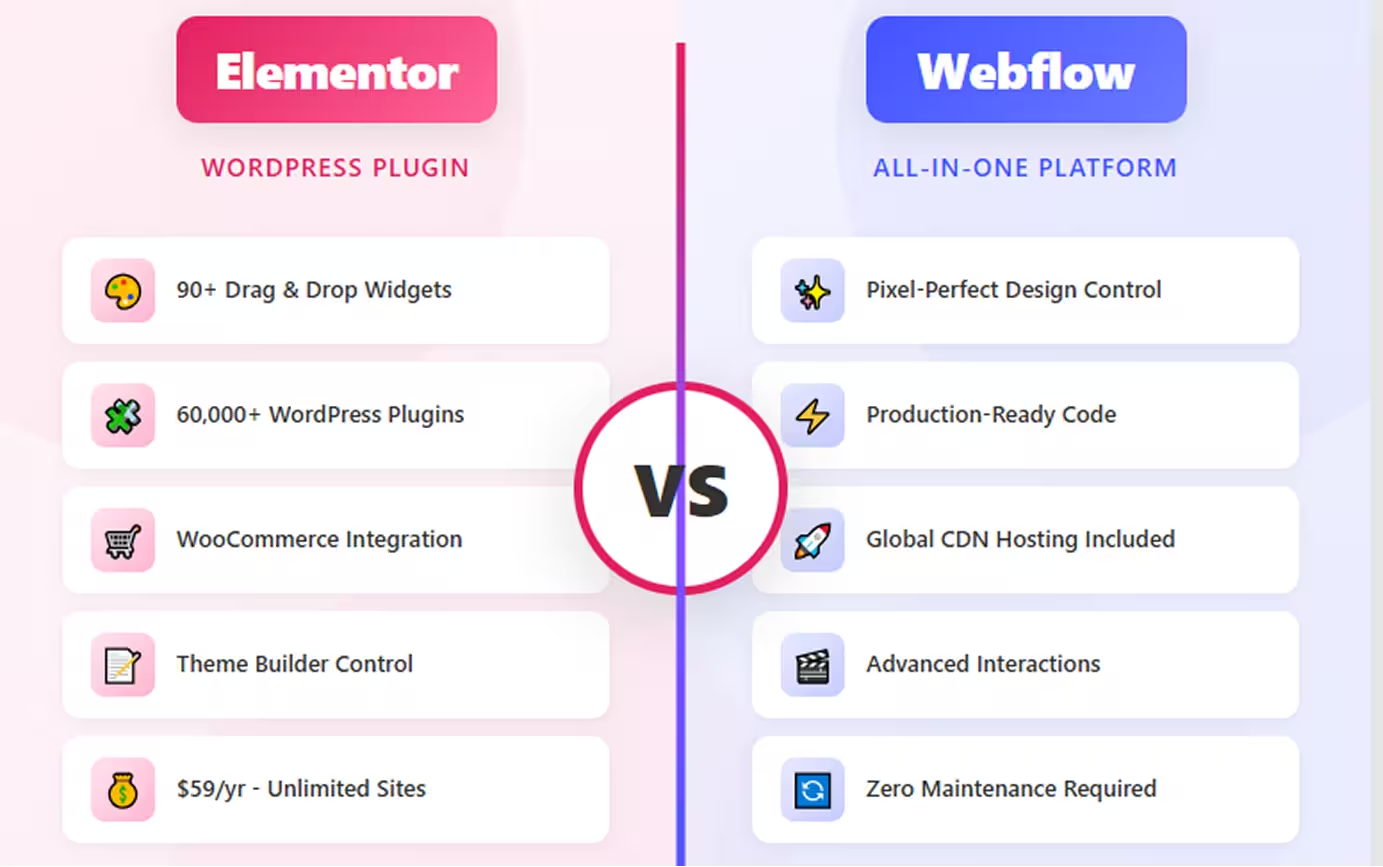
Elementor has become the dominant WordPress page builder with over 5 million active installations. It transforms WordPress into a visual design powerhouse while maintaining access to the vast WordPress ecosystem of 60,000+ plugins and themes. It's the choice for those who want WordPress's flexibility with drag-and-drop simplicity.
Webflow, conversely, is a complete platform that combines visual design, hosting, CMS, and deployment in one integrated solution. It generates clean, production-ready code and appeals to designers who want pixel-perfect control without the complexity of WordPress.
Both enable creating professional websites without coding, but they operate on entirely different philosophies. This comprehensive comparison examines design capabilities, performance, pricing, and long-term maintainability to help you make the right choice for your projects, whether you're a freelancer, agency, or business owner building your online presence.
Elementor: WordPress Page Builder Champion
Elementor is the most popular WordPress page builder plugin, transforming WordPress into a visual design environment with drag-and-drop functionality. It works within WordPress's infrastructure while providing frontend editing capabilities.
What Elementor Offers
Visual Drag-and-Drop Editor: Elementor's live frontend editor lets you design directly on your page, seeing changes instantly. No switching between backend and preview—what you see is what you get, making design intuitive and fast.
Extensive Widget Library: Access to 90+ widgets including headings, images, buttons, forms, sliders, testimonials, and specialized elements. Third-party developers have created thousands of additional widgets, expanding possibilities infinitely.
Theme Builder: Control every aspect of your WordPress site including headers, footers, single posts, archive pages, and WooCommerce templates. Create global elements that update across your entire site with one change.
Pre-Designed Templates: Over 300 professionally designed templates across various industries and niches. Import complete page designs or individual blocks, customize to match your brand, and launch quickly.
Responsive Design Controls: Detailed responsive editing with separate controls for desktop, tablet, and mobile. Adjust any element's appearance per device to ensure perfect presentation everywhere.
WordPress Ecosystem: Full access to 60,000+ WordPress plugins for any functionality imaginable—SEO, forms, membership, analytics, security, and more. The ecosystem is unmatched in breadth and depth.
Ideal Use Cases
- WordPress-based projects requiring plugin functionality
- Client websites where content editors prefer WordPress
- Blog-heavy sites leveraging WordPress's publishing capabilities
- WooCommerce stores with advanced e-commerce needs
- Budget-conscious projects building multiple sites
- Sites requiring extensive third-party integrations
Limitations
Elementor requires WordPress hosting and ongoing maintenance—updates, security patches, backups, and performance optimization are your responsibility. Code output, while improved, can be bloated compared to hand-coded sites. Performance requires optimization through caching plugins and careful widget usage.
Webflow: All-in-One Visual Platform
Webflow is a complete website platform handling design, development, hosting, and content management. It's built for designers seeking production-ready code without writing HTML, CSS, or JavaScript.
What Webflow Delivers
Production-Grade Code: Webflow generates clean, semantic HTML and CSS that rivals hand-coded websites. The code is optimized, accessible, and follows web standards. Developers appreciate the quality output.
Pixel-Perfect Design Control: Unprecedented design precision with full control over every CSS property through a visual interface. Control responsive behavior, interactions, and animations with designer-level detail.
Integrated CMS: Built-in content management system perfect for blogs, portfolios, case studies, and dynamic content. Non-technical editors can update content without touching design or requiring developer help.
Advanced Animations: Create sophisticated interactions including scroll-triggered effects, timed animations, and complex state changes—all visually without JavaScript. Professional motion design capabilities built-in.
Managed Hosting: Fast, global CDN hosting included with automatic SSL certificates, backups, and security. No server management, plugin updates, or technical maintenance required.
Design System Capabilities: Create reusable components and style guides that ensure consistency across your site. Update global styles once, and changes propagate everywhere automatically.
Perfect Scenarios
- Marketing websites and landing pages requiring peak performance
- Portfolio sites for agencies and creative professionals
- High-performance projects where Core Web Vitals matter
- Design-focused sites requiring pixel-perfect execution
- Teams wanting to eliminate maintenance overhead
- Projects where clean code impacts SEO and scalability
Constraints
Webflow lacks the WordPress plugin ecosystem—no access to specialized WordPress plugins for membership sites, forums, LMS, or advanced features. Per-site pricing becomes expensive with multiple projects. The learning curve is steeper, requiring understanding of CSS concepts like flexbox and grid.
Head-to-Head Comparison
Let's examine how Elementor and Webflow compare across critical dimensions:
Platform Architecture
Elementor: Operates as a WordPress plugin, requiring WordPress installation, hosting, and maintenance. You manage updates, security, backups, and performance. More control but more responsibility.
Webflow: Functions as a standalone platform with everything integrated—design, hosting, CMS, and deployment. Webflow manages infrastructure, updates, and security automatically.
Winner: Webflow for simplicity and zero maintenance; Elementor for WordPress ecosystem access.
Design Flexibility and Control
Elementor: Provides extensive customization through visual controls and widget options. You can achieve most designs, though complex layouts may require custom CSS. The widget-based approach is intuitive but sometimes limiting.
Webflow: Offers pixel-perfect, developer-level control over every design element. The visual interface maps directly to CSS properties, enabling any layout possible with code. Responsive design control is more granular.
Winner: Webflow for design precision and control; Elementor for speed with good-enough results.
Performance and Speed
Elementor: Performance depends on hosting quality and optimization. Out of the box, Elementor can generate extra CSS and JavaScript. Achieving fast speeds requires caching plugins, image optimization, CDN setup, and careful widget usage.
Webflow: Delivers exceptional performance automatically. Sites are hosted on global CDN, images are optimized, code is clean, and Core Web Vitals scores are typically excellent without optimization effort.
Winner: Webflow significantly outperforms Elementor in speed, especially for non-technical users.
Ease of Use
Elementor: Extremely beginner-friendly with intuitive drag-and-drop. If you've used WordPress, you'll adapt quickly. The learning curve is gentle—start building functional sites within hours.
Webflow: Requires understanding CSS concepts like box model, flexbox, and positioning. The learning curve is steeper initially, but you gain actual web development knowledge. Expect weeks to become proficient.
Winner: Elementor for immediate productivity; Webflow for long-term capability building.
Hosting and Maintenance
Elementor: Requires self-managed WordPress hosting—you handle server selection, WordPress updates, plugin updates, security patches, and backups. More flexibility but ongoing technical responsibility.
Webflow: Provides fully managed hosting with automatic SSL, global CDN, automatic backups, and zero maintenance. Updates happen transparently with no downtime or technical intervention required.
Winner: Webflow eliminates maintenance entirely; Elementor offers hosting flexibility with management responsibility.
E-commerce Capabilities
Elementor: Integrates seamlessly with WooCommerce, the world's most popular e-commerce platform. Access unlimited WooCommerce plugins for payments, shipping, subscriptions, memberships, and advanced inventory management.
Webflow: Built-in e-commerce functionality suitable for small to medium stores. Limited to basic features—no subscriptions, memberships, or advanced inventory. Transaction fees apply on lower plans.
Winner: Elementor with WooCommerce for serious e-commerce; Webflow for simple product sales.
Pricing Structure
Elementor:
- Free version: Limited widgets and features
- Pro: $59/year for 1 site
- Plus: $99/year for 3 sites
- Expert: $199/year for 25 sites
- Agency: $399/year for 1,000 sites
- Requires separate WordPress hosting ($5-50+/month)
Webflow:
- Free: 2 unhosted projects
- Basic: $14/month per site (includes hosting)
- CMS: $23/month per site
- Business: $39/month per site
- E-commerce: $29+/month per site
- Hosting included in all paid plans
Winner: Elementor is cheaper for multiple sites; Webflow includes hosting but costs more per site.
When to Choose Elementor
Choose Elementor when you need to:
- Work within the WordPress ecosystem and access its plugins
- Build WooCommerce stores with advanced e-commerce features
- Create blog-heavy or content-focused sites leveraging WordPress
- Manage multiple client sites where per-site costs matter
- Give clients the familiar WordPress interface for content management
- Need specific WordPress plugins for membership, forums, or LMS
- Have existing WordPress hosting you want to utilize
- Work with clients who already use WordPress
- Build sites requiring maximum plugin flexibility
- Prefer hosting control and platform independence
Elementor excels when WordPress's ecosystem is essential, when building many sites on a budget, or when clients specifically require WordPress for content management and familiarity.
When to Choose Webflow
Choose Webflow when you need to:
- Build high-performance marketing sites and landing pages
- Create pixel-perfect designs with complete CSS control
- Eliminate ongoing maintenance and technical overhead
- Deliver production-ready code without developers
- Need exceptional SEO and Core Web Vitals automatically
- Build sites with complex animations and interactions
- Learn real web development skills through visual design
- Avoid WordPress security concerns and update management
- Work on projects where code quality impacts long-term success
- Want reliable, fast hosting without separate CDN setup
Webflow is ideal for marketing sites, portfolios, and projects where performance and design quality are paramount, and where you want to eliminate the technical debt of WordPress maintenance.
Conclusion
Elementor and Webflow are both excellent page builders serving different needs. Elementor is the right choice for WordPress-based projects requiring extensive plugins, WooCommerce integration, or building multiple sites cost-effectively. It offers maximum flexibility through WordPress but requires ongoing maintenance.
Webflow excels for high-performance marketing sites where code quality, speed, and zero maintenance matter most. It delivers professional results with exceptional performance but costs more per site and lacks WordPress's plugin ecosystem.
For freelancers and agencies, many professionals use both strategically: Elementor for WordPress client projects requiring specific plugins or WooCommerce, and Webflow for marketing sites, portfolios, and projects where performance is critical.
The "best" choice depends on your project requirements, budget, WordPress needs, and maintenance preferences. Both can create professional websites—just on different platforms with different philosophies. Choose based on whether WordPress's ecosystem is essential or whether a streamlined, all-in-one platform better serves your goals.
FAQs
Q: Is Webflow faster than Elementor?
A: Yes, significantly. Webflow sites load faster out of the box with automatic CDN delivery, optimized code, and image processing. Elementor can achieve good speeds with optimization plugins and quality hosting, but requires manual effort. For Core Web Vitals and page speed, Webflow has a clear advantage.
Q: Can I migrate from Elementor to Webflow or vice versa?
A: Content (text, images) can migrate, but designs must be rebuilt manually. Elementor sites are WordPress-based while Webflow is proprietary. Migration means redesigning in the new platform. Neither offers automatic conversion—expect to rebuild your site's design and structure.
Q: Which is better for client websites?
A: It depends. Choose Elementor if clients want WordPress familiarity, need specific plugins, or run WooCommerce stores. Choose Webflow if clients want a maintenance-free site with exceptional performance and you'll handle updates, or if they can learn Webflow's Editor mode.
Q: Do I need coding knowledge for Elementor or Webflow?
A: Elementor requires no coding knowledge and is fully visual, making it accessible to beginners. Webflow doesn't require coding but benefits from understanding CSS concepts like flexbox and the box model. You can use both without code, but Webflow's learning curve is steeper.
Q: Which platform has better SEO capabilities?
A: Both can achieve excellent SEO. Webflow's cleaner code and faster loading speeds give it a technical SEO advantage. Elementor offers more SEO plugins (Yoast, Rank Math, All in One SEO) for extended functionality. For pure technical performance and SEO, Webflow has an edge, but both can rank well with proper optimization.